
Operational Protocol

Our operational protocol stands apart from standardized surveys limited to quick observations.
Our protocol is based on a thorough, rigorous, and fully documented approach, adapted to the technical, regulatory, and contractual requirements specific to each vessel and each case. It enables the production of a reasoned, traceable, and legally defensible survey, founded on the analysis of the applicable normative framework and on objective and verifiable criteria. This level of rigour ensures reliability and decision‑making security commensurate with the insurance, legal, and operational stakes at hand.
Here are some concrete examples illustrating the difference between a quick survey and an in‑depth survey:
Example: navigation lights survey.
Standardized survey, quick observations:
We note the presence of port, starboard, and stern navigation lights.


Tested and fully operational.
Sample excerpt from a DELIA survey report

-
Presence of Hella Marine LED navigation lights (NaviLed 2LT 980 520‑001 and 2LT 980 520‑201) installed on the forward lifelines. They are functional. With a range of 2 Nm for a vessel under 20 m, the luminous range complies with EN ISO 16180:2018 article 4. Certifications:
-
IP67
-
ABYC C‑5
-
CE
-
ISO19009:2015
-
EN 60945:2002
-
USCG 33 CFR 183.810
-
-
The measured average luminous intensity of the port light is 614 Lux at 30 cm (i.e., over a surface area of 4πr², i.e., 4π × 0.3² = 1.131 m²).
-
The measured average luminous intensity of the starboard light is 370 Lux at 30 cm (i.e., over a surface area of 4πr², i.e., 4π × 0.3² = 1.131 m²).
-
The formula for converting Lux to candelas (cd) is:
cd = Lux × surface area (in m²)
cd = 614 x 1,131m² = 694,43 cd

cd = 370 x 1,131m² = 418,47 cd

-
We confirm that the lateral lights exceed the required >12 cd specified in article 4.4 of standard 16180:2017.
-
Presence of the Hella Marine stern LED light (NaviLed 2LT 980 520‑501) standing on the stern starbord hull with identical range and certifications.
-
The measured average intensity of the stern light is 683 Lux at 30 cm (i.e., over a surface area of 4πr², i.e., 4π × 0.3² = 1.131 m²).
-
The formula for converting Lux to candelas (cd) is:
cd = Lux × surface area (in m²)
cd = 683 x 1,131m² = 772,47cd
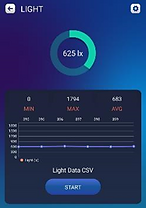
-
We confirm that the lateral lights exceed the required >12 cd specified in article 4.4 of standard 16180:2017.
-
... sample completed. DELIA's survey also notes the regulatory angles of the lights.
Example: boom vang survey.
Standardized survey, quick observations:
We note the presence of a SELDEN boom vang.

The equipment is in good working order.
Sample excerpt from a DELIA survey report:
-
Presence of a rigid Selden vang (Rodkicker 30, ref.: 094‑056) in aluminium, with no visible dents.


-
Technical specifications of the Rodkicker 30 for a fractional rig:
-
Max righting moment: 120 kNm
-
Max displacement: 20 t
-
Height of boom: >1,800 mm
-
Max working load: 38 kN
-
-
We note that the maximum allowable displacement is lower than the vessel’s light displacement (22.3 t) or loaded displacement (31–32 t depending on the navigation category). We also note that the maximum allowable righting moment is lower than the vessel’s initial righting moment (as stated by Selden, 151.0 kNm) or the one calculated based on the vessel’s permitted displacement (181.5 kNm).
-
We express serious reservations about the durability of the rigid vang and recommend installation of a hydraulic vang.
-
Presence of a Selden vang anchor fitting (511‑508), secured with 2 stainless steel screws, installed on the boom. No signs of galvanic corrosion were observed.

-
Presence of Selden fittings for boom vang attachment on the mast, type Selden (508-233) with no galvanic corrosion.

-
... sample completed. DELIA's survey also notes also other points regarding the boom vang.
Example: engine room survey.
Standardized survey, quick observations:
We note a 2 kg automatic fire extinguisher up to date for inspection.

The engine compartment shows no traces of oil or greasy residues.
A ventilation fan is present and in good working condition during engine start.
A 95 Ah AGM starter battery is installed and in good working condition. The battery terminals show no signs of corrosion.

Sample excerpt from a DELIA survey report:
Fire extinguishing system:
-
presence of a Fireblitz automatic fire extinguisher (FBA‑G2) mounted on the starter battery shelf. Extinguishing agent: 2 kg of HFC227ea (clean agent) suitable for engines. Heat-activated (79°C ±5°C). We note the gauge shows the pressure in the red zone. We request an inspection of the fire extinguisher and its replacement if necessary. The installation is non‑compliant because it lacks a remote pull‑cable. We also note the absence of an automated system for extinguishing the combustion engines located in the bilge. The extinguisher cannot fully flood the engine compartment (standard EN ISO 9094:2017 article 7.4).
-
Acoustic and thermal insulation is present on all walls of the engine compartment. The owner’s manual states: “The engine room is equipped with fire‑resistant acoustic insulation. This material withstands fire for a short period.” We do not have sufficient technical information to verify the compliance of the insulation with Article 4.3 of standard EN ISO 9094:2017. We note that some engine components are in contact with, or even embedded in, the insulation.

Engine Compartment Ventilation and Extraction
-
Jabsco bilge blower (35440-0000) installed on the bulkhead separating the engine compartment from the aft enclosure.
-
Airflow: 7.1 m³/min
-
Power supply: 12V
-
Protective fuse: 15A
-
Duct diameter: Ø 10 cm
-
Certifications: ISO 8846 MARINE and USCG for explosion protection, ISO 11105 marine, EN60945, and CE/UKCA (EU models)
-

Ventilation
-
The cross-section of the engine compartment ventilation duct is calculated as follows:
S = engine power (kW) × 1.65 = 110 × 1.65 = 181.50 cm²
The duct diameter must be:

When two ducts are installed, they must be:

We note that there is only a single Ø 10 cm air extraction at the upper part of the engine compartment. We request the installation of a second ventilation line, equipped with an electric fan at the lower part of the compartment, to provide fresh air.
-
The engine air consumption, according to the Volvo Penta reference (21990132 01), is 7.4 m³/min.
Air Intake Calculation:
Fan Flow Rate Calculation:


We note that the fan’s airflow is 7.1 m³/min, while the engine consumes 7.4 m³/min. Installing a second ventilation line will resolve this air under-supply.
Extraction
-
The cross-section of the engine compartment ventilation duct is calculated as follows:
S = puissance moteur (kw) x 1.65 = 110 x 1.65 = 181,50 cm²
Fan Flow Rate Calculation:

Remarks
The specified engine power is based on an ambient temperature of +25°C. Proper air intake and adequate ventilation are essential to ensure full engine power while preserving its longevity. If the intake air temperature exceeds +25°C, engine power decreases by approximately 1.0% for turbocharged engines for every 10°C increase. If the temperature consistently remains above 45°C, adjustment of the engine injection pump will be required.
Electrical Supply
There is a dedicated engine battery (Deta DK950) installed on the upper shelf of the engine compartment. During the preparation of our report, we noted that this battery is intended for automotive use.
-
Technology: AGM
-
Battery type: Starting
-
Voltage: 12 V
-
Capacity: 95 Ah
-
CCA: 850 A (EN)
-
Case size: L05
-
Maximum charging voltage: 14.6 V
We recall the battery specifications according to the engine owner’s manual (reference: 47707429 10-2020):
-
Minimum: 750 CCA – 75 Ah
-
Maximum: 800 CCA – 110 Ah


This valve-regulated battery does not need to be installed in a sealed box. However, we recommend relocating the battery anchoring points to the shelf rather than the wooden support slats. Since the strength of the fixation of these slats is unknown, we advise moving the battery clamps in case of heavy heeling of the vessel.
We also recall some of the battery manufacturer’s recommendations: Batteries contain acid and must always be protected against any risk of tray damage. Batteries should have at least one insulated terminal to prevent accidental short circuits. Store batteries in dry, cool, and well-ventilated areas, away from locations where sparks could occur. AGM (VRLA) batteries contain a limited amount of acid. During use or installation, it is important to ensure that the batteries are not exposed to temperatures above 60°C. Temporary temperature spikes above 80°C are tolerated for limited periods not exceeding 3 hours.
Dynamic Test and Battery Capacity
During our investigation, we conducted a dynamic sea trial in Ibiza, in the bay of San Antony. The air temperature was 23.5°C, and the water temperature was 22.6°C.

We ran the engine at 2,570 rpm for 10 minutes before recording the following temperatures:

The engine block temperature was 70.2°C.

The battery temperature was 25,3°C.
Battery capacity calculation based on temperature:

CT: Battery capacity at temperature 𝑇 (in Ah or as a percentage).
C0: Nominal capacity at the reference temperature 𝑇0 (usually 25°C).
𝛼 : Coefficient of capacity variation with temperature (generally between 0.004 and 0.006 per degree Celsius).
𝑇 : Ambient temperature (in °C).
𝑇0 : Reference temperature (often 25°C).
During our dynamic test, the temperature 𝑇 rose to 25.3°C. The battery capacity is therefore:

We note that, although the battery capacity slightly increased in the short term, long-term use at an average temperature of 35°C accelerates battery degradation.
As a rule of thumb, when the temperature increases by 10°C, the battery lifespan is reduced by half.
We strongly caution against using an automotive battery in an engine compartment, as operating temperatures can be high.
We request the replacement of the battery in accordance with the specifications required by Volvo Penta. We recommend a battery such as a Varta Silver Dynamic AGM 110 Ah (reference: 605901095), which has the same width and height as the currently installed battery. It is 4.10 cm longer, but will fit the available space.
-
…sample completed. The DELIA's survey also notes other factors concerning the engine compartment.